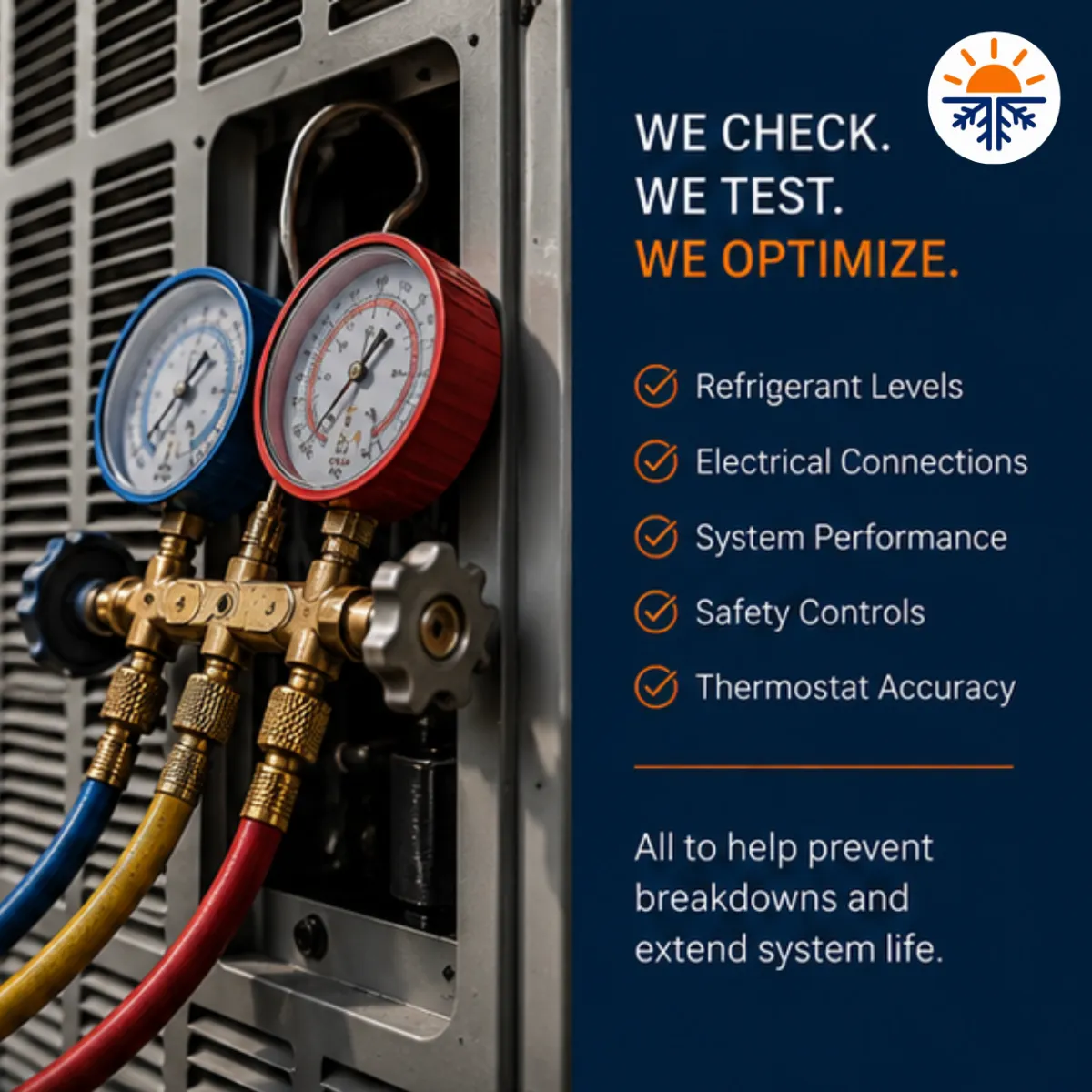
Professional HVAC Tune-Up: What to Expect

Home Maintenance, HVAC Tune-Up
What Happens During a Professional HVAC Tune-Up?
If you have ever scheduled a heating and cooling visit and wondered what the technician is actually doing for an hour or more in your home, you are not alone. A professional HVAC tune-up is far more than a quick glance at your furnace or air conditioner—it is a detailed inspection, cleaning, and adjustment that helps your system run safely, efficiently, and reliably all year long.
Why Tune-Ups Matter for Your Home Comfort and Budget
Your heating and cooling system is one of the most expensive and hard-working pieces of equipment in your home. It runs for hundreds, sometimes thousands, of hours each year. Just like a car needs regular oil changes and inspections, your HVAC system needs periodic professional attention to stay in top condition. A tune-up helps:
Reduce the risk of unexpected breakdowns during extreme heat or cold
Improve energy efficiency, which can lower monthly utility bills
Extend the lifespan of your furnace, air conditioner, or heat pump
Catch small issues before they become expensive repairs or safety hazards
While every company has its own checklist, most professional tune-ups follow a similar structure. Here is what typically happens, step by step, when an HVAC technician comes to your home for a maintenance visit.
1. Initial Conversation and System Overview
A good tune-up starts with a brief conversation. The technician will usually ask how your system has been performing, whether you have noticed any unusual noises, hot or cold spots, higher bills, or issues with air quality. This helps them focus on potential problem areas and understand how you use your heating and cooling day to day.
They will also locate and visually assess the main components of your system—furnace or air handler, outdoor condenser unit, thermostat, ductwork, and any accessories such as humidifiers, air cleaners, or UV lights. This quick overview sets the stage for a more detailed inspection and cleaning.
2. Thermostat and Basic Controls Check
Before opening up any equipment, the technician will test your thermostat. They will make sure it is level, securely mounted, and responding correctly when they change temperature settings or switch between heating, cooling, and fan modes. If you have a programmable or smart thermostat, they may also confirm that schedules are set properly and batteries (if present) are in good condition.
This step ensures that your system is receiving accurate commands and that basic safety and comfort controls are working as they should. Sometimes, a simple thermostat issue can mimic a bigger HVAC problem, so verifying this early is important.
3. Air Filter and Airflow Inspection
Next, the technician will check your system’s air filter. A clogged or dirty filter is one of the most common causes of poor performance and high energy use. If the filter is dirty, they will recommend replacing it, and many companies include a standard filter as part of the tune-up. They will also verify that the filter is the correct size and type for your system and that it is installed in the right direction for airflow.
Beyond the filter, they may inspect return and supply vents, looking for blockages, closed registers, or visible duct issues that could restrict airflow. Healthy airflow is critical: poor airflow forces your HVAC equipment to work harder, shortening its life and reducing comfort throughout your home.
4. Electrical Components, Safety Checks, and Connections
Once basic controls and airflow are checked, the technician will typically turn off power to the unit and inspect electrical components. This includes tightening loose connections, checking wiring for wear or damage, and examining contactors, relays, and capacitors. Loose or corroded connections can cause intermittent problems, overheating, or even pose a fire risk if left unaddressed.
They may use specialized tools to test voltage and amperage on motors and other parts, comparing readings to manufacturer specifications. If a component is drawing too much current or showing signs of failure, they can flag it before it fails completely—often saving you from a no-heat or no-cool emergency call later on.
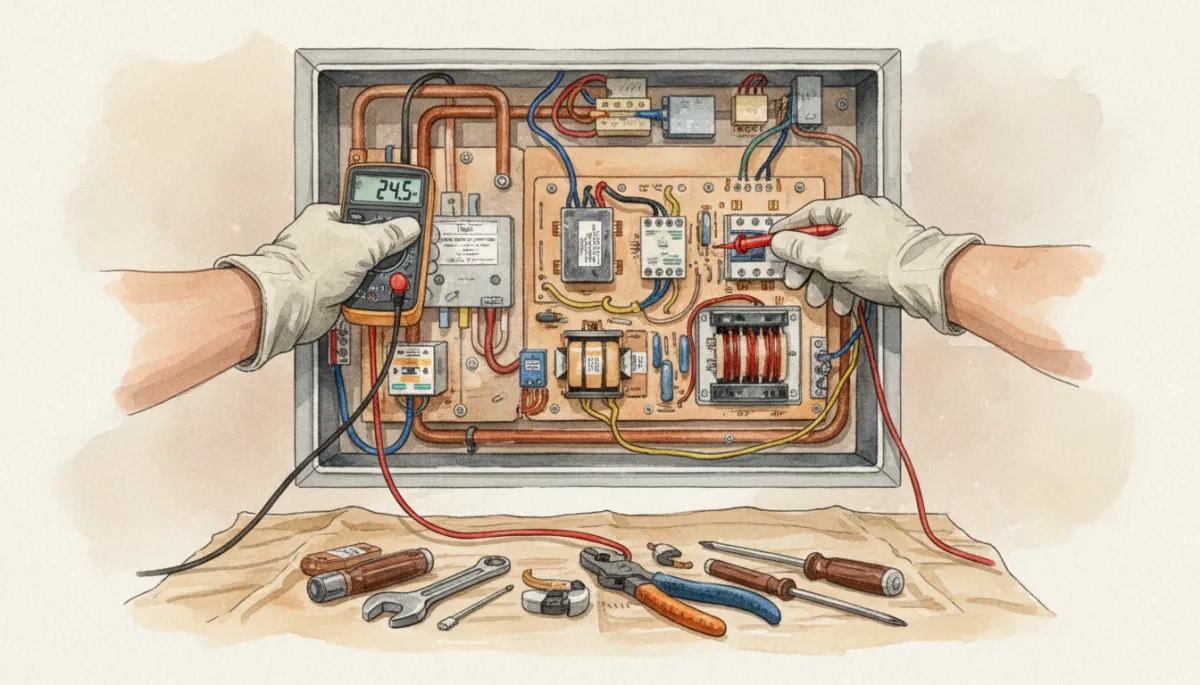
Electrical testing during a tune-up helps catch failing parts before they cause a breakdown.
5. Cleaning Critical Components for Better Efficiency
Dust, dirt, and debris are the enemies of a smooth-running HVAC system. During a tune-up, the technician will clean several key components, depending on whether they are working on your furnace, air conditioner, or heat pump:
Indoor blower assembly: The blower fan moves air through your ducts. Cleaning its blades and housing helps maintain strong, even airflow and reduces strain on the motor.
Evaporator and condenser coils (for cooling): Coils transfer heat in and out of your home. When they are coated with dust or grime, your system must run longer to achieve the same temperature, increasing wear and energy use.
Burners and combustion area (for gas furnaces): Cleaning burners helps ensure a steady, efficient flame and reduces the risk of soot buildup or incomplete combustion.
This cleaning is not cosmetic; it directly affects how much energy your system uses and how consistently it can heat or cool your home. A clean system does the same job with less effort, which you will notice in comfort and often on your utility bill.
6. Heating-Specific Steps: Combustion, Safety, and Venting
If your tune-up is for a gas or oil furnace, several heating-specific safety checks are especially important. The technician will examine the heat exchanger for signs of cracks or corrosion. A damaged heat exchanger can allow combustion gases, including carbon monoxide, to mix with the air you breathe—so this step is critical for your family’s safety.
They will also:
Inspect and clean burners and ignition systems (pilot, hot surface igniter, or spark igniter)
Check gas pressure and fuel connections for proper operation and leaks
Verify that the flue or vent pipe is clear, properly sloped, and securely attached so exhaust gases leave the home safely
In many cases, they will test safety controls such as the high-limit switch, which shuts the furnace down if it overheats, and other built-in protections designed to prevent dangerous conditions.
7. Cooling-Specific Steps: Refrigerant, Coils, and Condensate
For air conditioners and heat pumps, the tune-up includes additional cooling-focused tasks. The technician will inspect the outdoor condenser unit, ensuring the fan blades are in good condition and that there is adequate clearance around the unit for proper airflow. They will clean the condenser coil if needed and check the condition of insulation on refrigerant lines.
They will also:
Measure refrigerant levels and operating pressures to see if they are within the manufacturer’s recommended range
Inspect the condensate drain and pan to make sure water from the indoor coil is draining properly and not at risk of backing up or leaking
Check the reversing valve and defrost cycle on heat pumps to verify that the system can switch smoothly between heating and cooling modes
Low refrigerant, dirty coils, or a clogged drain can all lead to poor cooling performance, higher bills, and even water damage. Addressing these issues during a tune-up keeps your cooling system ready for the hottest days of the year.
8. System Lubrication, Adjustments, and Fine-Tuning
Many moving parts in your HVAC system need to operate smoothly. During a tune-up, the technician may lubricate motor bearings or other components that are designed to be serviced. Proper lubrication reduces friction, noise, and wear on parts that are expensive to replace if they fail.
They will also check and adjust belt tension (if your system uses belts), verify that dampers and other airflow controls are positioned correctly, and make minor adjustments to ensure your system cycles on and off as intended. These small tweaks help your equipment run more quietly, evenly, and efficiently.
9. Performance Testing and Temperature Checks
Once cleaning and adjustments are complete, the technician will restore power and run your system through a full heating or cooling cycle. They will listen for unusual sounds, watch how the system starts and stops, and measure temperature differences between supply and return air. This “temperature split” is a simple but powerful indicator of how well your system is transferring heat.
If something is still not quite right—perhaps the temperature change is too small, or the system short-cycles—they can investigate further before leaving. The goal is to leave your system running smoothly, not just looking clean on the inside.
10. Final Report, Recommendations, and Homeowner Questions
At the end of the visit, you should receive a summary of what was done and what was found. Many companies use a printed or digital checklist that notes each item inspected, cleaned, or adjusted, along with any concerns or recommended repairs. If the technician found parts that are worn or nearing the end of their life, they will typically explain your options and, if appropriate, provide estimates for repairs or replacements.
This is also the perfect time to ask questions: How often should you change your filter? Are there simple steps you can take to improve comfort in certain rooms? Would a programmable thermostat or duct sealing make sense for your home? A professional tune-up is not just about the equipment—it is also an opportunity to learn how to get the most from your entire heating and cooling system.
How Often Should You Schedule a Professional HVAC Tune-Up?
Most experts recommend scheduling professional maintenance once a year for each system: one visit for heating and one for cooling. In many regions, that means a furnace tune-up in the fall before cold weather arrives and an air conditioning or heat pump tune-up in the spring before the first heat wave. If you have a heat pump that provides both heating and cooling, your contractor may suggest a single detailed visit or two shorter checkups spaced throughout the year.
If your equipment is older, runs heavily, or you have a large household with pets and lots of foot traffic, more frequent maintenance may make sense. Many homeowners find value in maintenance plans that include annual tune-ups, priority service, and discounts on repairs for a predictable monthly or yearly fee.

The Bottom Line: What You Gain from a Professional HVAC Tune-Up
When you see a technician carefully inspecting, cleaning, testing, and adjusting your heating and cooling system, it becomes clear that a tune-up is much more than a quick once-over. It is a structured, step-by-step process designed to protect one of your home’s biggest investments, keep your family comfortable, and help you avoid unpleasant surprises when the weather is at its worst.
By understanding what happens during a professional HVAC tune-up—from thermostat checks and airflow inspections to safety testing and performance measurements—you can schedule maintenance with confidence and know what to expect from your visit. In return, you get peace of mind, better comfort, and often lower operating costs, all from a relatively small yearly commitment of time and money.
If it has been more than a year since your last service, or if you are unsure when your system was last professionally inspected, consider booking a tune-up before the next season change. Your future self—relaxing in a comfortable home while your HVAC system quietly does its job—will be glad you did.
Contact us at https://coolandwarmsolutions.com/ for all of your hvac needs!